Paid Ads Services Built Around Qualified Leads
Paid advertising can put your business in front of potential customers much faster than organic channels alone. While SEO, Local SEO, and AI Visibility build long-term authority, Paid Ads can create immediate exposure across Google, social platforms, LinkedIn, YouTube, and other high-intent digital channels.
Traffic is the easiest number to inflate and the least useful one to celebrate, so it is not how we judge a campaign. We look at whether the advertising is producing qualified calls, useful form submissions, booked appointments, consultations, and revenue opportunities. A campaign can generate a large number of clicks and still fail if the search terms are wrong, the landing page is weak, or the leads are not handled properly.
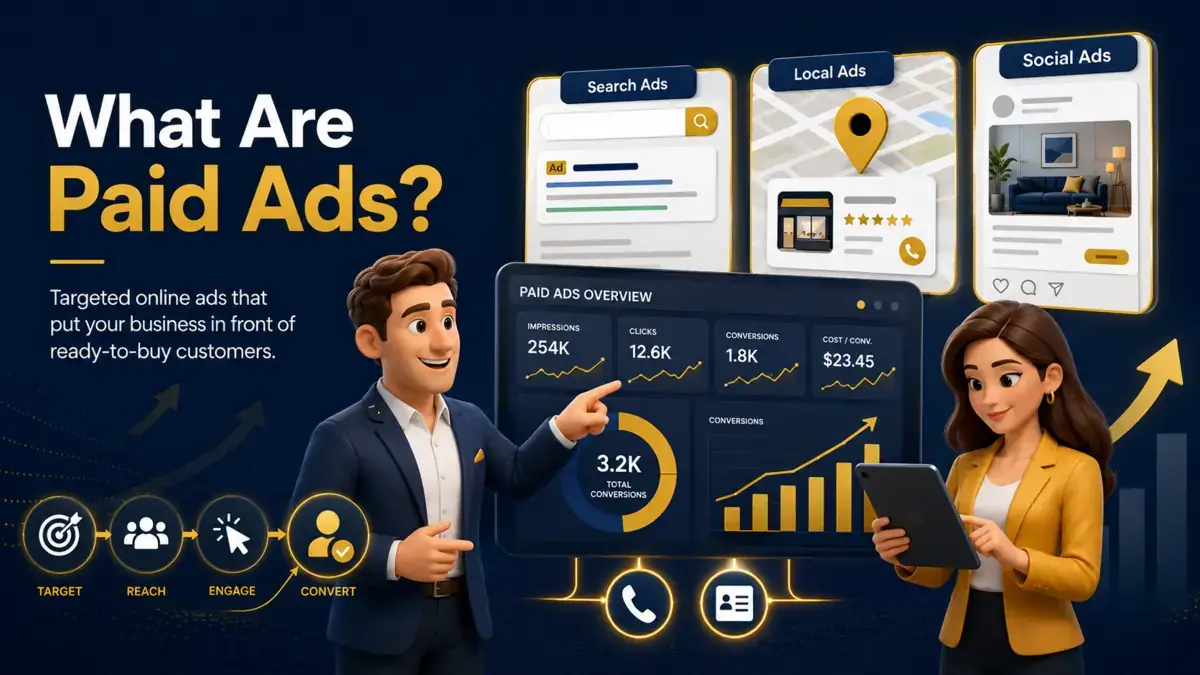
What Are Paid Ads?
Paid Ads are digital placements that allow a business to reach a selected audience online. Depending on the platform, targeting may be based on search intent, location, professional role, interests, behavior, previous website visits, or customer data.
Paid Ads can appear in many places, including:
- Google search results
- Google Maps and Local Service Ads
- Facebook and Instagram feeds
- LinkedIn feeds and inbox placements
- YouTube
- Display networks
- Retargeting campaigns across websites and apps
The purpose is not simply to buy visibility. It is to reach a relevant person with the right message and guide that person toward a measurable next step.
Why Are Paid Ads Important to My Business?
Paid Ads allow a business to compete for attention immediately. They can be useful when launching a new service, entering a new market, supporting an existing SEO strategy, filling seasonal demand, or testing whether a specific offer produces qualified interest.
Paid advertising gives your business the ability to:
- Generate leads faster
- Target specific locations, demographics, and interests
- Appear above organic search results
- Compete in high-value markets
- Retarget people who already visited your website
- Promote specific services, offers, or campaigns
- Track performance and measure return on investment
- Scale marketing when campaigns are profitable
Digital platforms provide detailed data, but more data does not automatically mean better decisions. Clicks, impressions, and platform-reported conversions need to be compared with call quality, lead quality, appointments, signed clients, and actual revenue.
Why Paid Ads Are Critical to Your Digital Marketing Strategy
A complete marketing strategy should not depend on one channel. SEO builds long-term organic visibility. Local SEO improves map and local search performance. AI Visibility strengthens how the business is understood across emerging search experiences. Paid Ads can create demand and traffic while those longer-term efforts continue to develop.
A strong Paid Ads strategy should help answer practical business questions:
- Which services generate the best leads?
- Which locations produce the strongest return?
- Which ad messages convert the best?
- Which audiences are most likely to become customers?
- How much does it cost to generate a qualified opportunity?
- How can lead volume increase without wasting budget?
We connect advertising to the full customer journey. That includes the search term or audience, the ad, the landing page, the call or form, the intake response, and the final business outcome.
Google Pay-Per-Click Ads
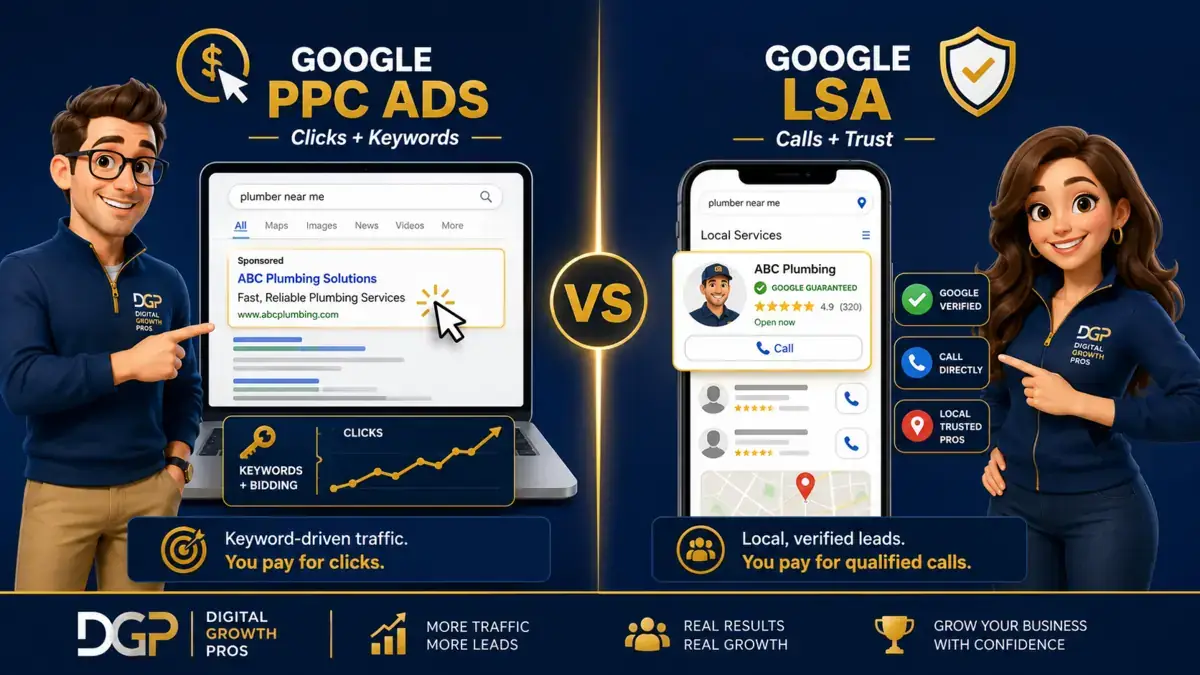
Google Pay-Per-Click ads, often called Google PPC or Google Search Ads, can place your business near the top of Google when someone searches for a product or service you offer. These campaigns are powerful because they can reach a prospect at the moment that person is actively looking for a solution.
A successful Google PPC campaign includes:
- Keyword research
- Competitive analysis
- Ad copywriting
- Landing page strategy
- Conversion tracking
- Call tracking
- Negative keyword management
- Bid strategy optimization
- Location targeting
- Ongoing campaign refinement
One of the most common mistakes is launching a campaign and allowing automation to spend without enough control. Search terms, match types, locations, budgets, bidding, and conversion data need regular review. The advertising platform is designed to spend the available budget; management determines whether that spending is useful.
Google Local Service Ads
Google Local Service Ads, or LSAs, are designed for eligible local service businesses that want to generate calls and leads directly through Google. These ads may appear above traditional search ads and can display reviews, hours, service areas, and Google verification indicators when applicable.
Google Local Service Ads can be valuable for businesses such as:
- Law firms
- Medical practices
- Home service companies
- Professional service providers
- Local contractors
- Financial service providers
- Real estate-related businesses
LSAs are commonly billed around leads rather than clicks, but that does not make every lead valuable. Performance can be affected by categories, service areas, reviews, responsiveness, budget, profile quality, disputes, and the way calls are handled. We review lead quality and account operations, not just the lead count shown in the dashboard.
Social Media Ads
Social Media Ads reach people on platforms such as Facebook and Instagram. Unlike paid search, where the prospect is often actively looking for a service, social advertising may be used to create awareness, introduce an offer, retarget previous visitors, or build demand before someone searches.
Social Media Ads can promote:
- Services
- Special offers
- Educational content
- Case studies
- Videos
- Lead magnets
- Events
- Brand awareness campaigns
- Retargeting campaigns
Creative quality matters heavily on social platforms. The image or video, opening message, offer, audience, and landing experience must work together. A polished graphic cannot rescue a weak offer, and precise targeting cannot compensate for a message that gives the audience no reason to act.
LinkedIn Ads
LinkedIn Ads can be effective for businesses selling to executives, business owners, professionals, or narrowly defined industries. Costs may be higher than on broader social platforms, but the targeting can be valuable when one qualified opportunity has significant potential value.
LinkedIn allows advertisers to target users based on:
- Job title
- Industry
- Company size
- Seniority
- Skills
- Location
- Company name
- Professional interests
This can support B2B lead generation, recruiting, consulting, software marketing, webinar registration, account-based marketing, and outreach to specific decision-makers. LinkedIn is not the right fit for every business, so audience size, sales cycle, offer value, and expected cost per opportunity should be considered before launch.
Paid Ads Work Best When Connected to a Strong Website
Paid Ads can create the visit, but the landing page must turn that attention into action. Sending expensive traffic to a slow homepage, a vague service page, or a long generic form can raise the cost per lead and make a good campaign appear weak.
Effective landing pages typically include:
- A clear headline
- A strong value proposition
- Trust signals
- Reviews or testimonials
- Simple contact options
- Click-to-call functionality
- Fast load speed
- Mobile-friendly design
- Service-specific content
- Clear calls to action
We review the entire experience because the campaign dashboard cannot explain why a visitor abandoned a slow page, distrusted an offer, or failed to complete a form.
Paid Ads Need Proper Tracking
Advertising cannot be managed well when the business cannot identify what happened after the click. Tracking should include meaningful actions such as phone calls, forms, appointments, chat leads, purchases, consultations, and CRM outcomes.
The better question is not simply how many clicks the campaign produced. It is how many qualified opportunities were created, what those opportunities cost, how quickly the team responded, and how many became revenue.
Paid Ads and AI Visibility
Paid Ads do not directly create organic or AI rankings, but they can support a broader digital presence by increasing brand exposure and bringing more people into contact with the website, reviews, profiles, and content.
That relationship should not be overstated. Advertising buys placement; it does not automatically create authority. SEO, AI Visibility, reputation, content quality, and customer experience still need to stand on their own.
Common Paid Ads Mistakes Businesses Make
Businesses are often disappointed with Paid Ads because the campaign was launched without the structure, tracking, budget, or follow-up needed to evaluate it correctly.
- Running campaigns without proper tracking
- Using broad keywords that waste budget
- Sending traffic to the homepage instead of a focused landing page
- Not using negative keywords
- Ignoring call quality and intake performance
- Failing to test ad copy and creative
- Not separating campaigns by service or location
- Setting budgets too low to collect useful data or compete effectively
- Judging success only by clicks instead of qualified conversions
- Not retargeting website visitors when appropriate
- Allowing automated recommendations to run without review
- Stopping campaigns before enough reliable data has been collected
Paid Ads require ongoing management. Search behavior changes, competitors adjust, creative becomes stale, budgets shift, and lead quality can change over time.
Our Paid Ads Approach
Digital Growth Pros begins by defining what a qualified lead means to the business. We identify the services with the most value, the locations that matter, the likely sales cycle, the intake process, and the numbers required for a campaign to make business sense.
Our approach may include:
- Campaign research and strategy
- Competitor analysis
- Keyword planning
- Audience targeting
- Ad copywriting
- Creative development
- Landing page recommendations
- Call tracking and conversion tracking
- Google PPC management
- Google Local Service Ads management
- Social Media Ads management
- LinkedIn Ads strategy
- Performance reporting
- Ongoing optimization
Reporting should show more than platform activity. We want the business to understand what generated the lead, whether the lead was useful, and what happened after it arrived.
Paid Ads Help You Scale What Works
Paid Ads can be scalable, but only after the business understands what is working. Increasing budget before validating lead quality can scale waste as quickly as it scales opportunity.
Useful campaign data may show that one service is more profitable, one location produces stronger prospects, one landing page converts better, or one message attracts higher-quality calls. Investment can then be shifted toward the combinations that produce the strongest business results.
Are Paid Ads Right for My Business?
Paid Ads may be valuable when the business wants faster visibility, has a clear offer, can respond quickly to leads, and has enough budget to compete and gather meaningful data.
Paid Ads may be right for your business if:
- You need more qualified leads
- You want faster visibility in Google
- You operate in a competitive market
- You want to promote specific services
- You want to generate more phone calls
- You want better control over lead volume
- You want to retarget website visitors
- You want to reach decision-makers on LinkedIn
- You want your marketing to be more measurable
Paid Ads are not a substitute for a weak offer, poor intake, or an unclear website. They work best as one part of a complete digital marketing and conversion system.
Get More Qualified Opportunities With Paid Ads
Your customers are searching, comparing, scrolling, reading reviews, and deciding which business to contact. Paid Ads can help your company appear during those moments, but the strategy must connect visibility to lead quality and revenue.
Whether you need Google Pay-Per-Click ads, Google Local Service Ads, Social Media Ads, LinkedIn Ads, or a coordinated paid media strategy, contact Digital Growth Pros to discuss which channels, markets, and campaign structure make sense for your business.