
SEO (Search Engine Optimization)
Search Engine Optimization, or SEO, is a core part of a successful digital marketing strategy. When potential customers search for the products or services you provide, your business needs to be visible in the places they actually use: Google Search, Google Maps, AI-powered results, voice search, and answer-based platforms.
I’ve watched Google rewrite the rules on SEO three or four times in the last 28 years, and the only version of it that’s ever held up is the boring one: build something real, not a collection of isolated keyword rankings. The objective is to attract the right visitors, turn more of those visits into qualified opportunities, and build an online presence that continues creating value over time.
After nearly three decades in technology and digital marketing, we have seen SEO evolve from basic keyword placement into a much broader discipline. Today, strong SEO depends on technical performance, useful content, local relevance, authority, user experience, conversion strategy, and AI visibility. When those pieces support one another, your website becomes easier for both search engines and potential customers to understand and trust.
What Is SEO?
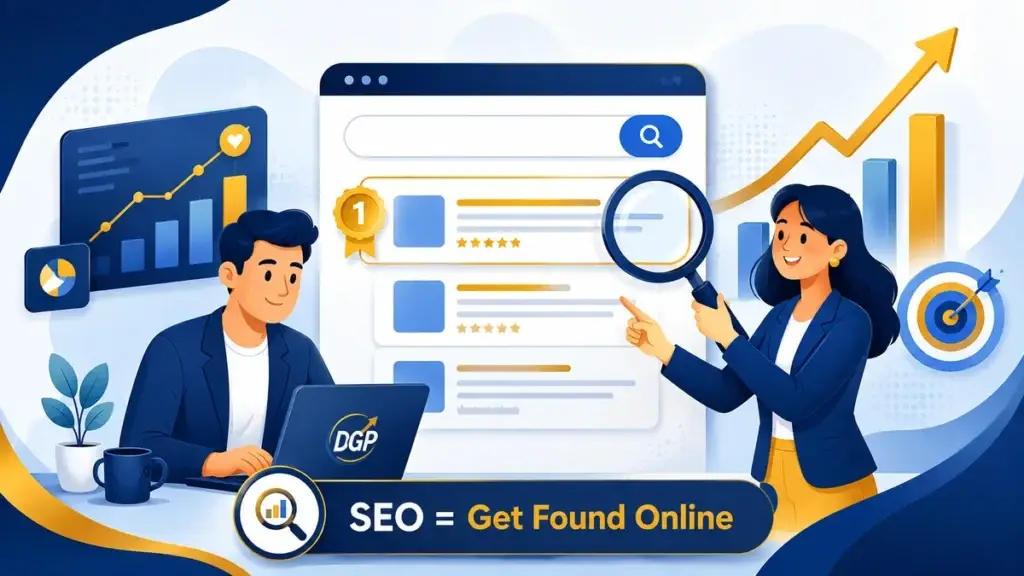
SEO stands for Search Engine Optimization. It is the process of improving your website so search engines can understand your business, services, location, expertise, and the value you provide. When done correctly, SEO helps your pages compete in organic search results for terms related to what your customers actually need.
For example, a business may need to appear for a broad service phrase, a location-based search, a detailed customer question, or a comparison between two options. The goal is not to rank for every possible phrase. It is to earn visibility for searches that can lead to a real conversation, appointment, or sale.
SEO includes several key areas:
- Technical SEO makes sure your website can be crawled, indexed, loaded quickly, and understood by search engines.
- On-page SEO improves page titles, headings, internal links, content structure, keyword targeting, image optimization, and user experience.
- Content SEO creates helpful, original pages that answer real questions and demonstrate your experience.
- Local SEO helps your business appear in local Google searches, Google Maps, and location-based results.
- Authority building improves trust through backlinks, mentions, reviews, citations, and consistent brand signals.
- Conversion-focused SEO turns search traffic into calls, form submissions, appointments, and customers.
- SEO builds long-term visibility. Paid ads can create immediate exposure, while SEO develops an owned source of traffic and demand over time.
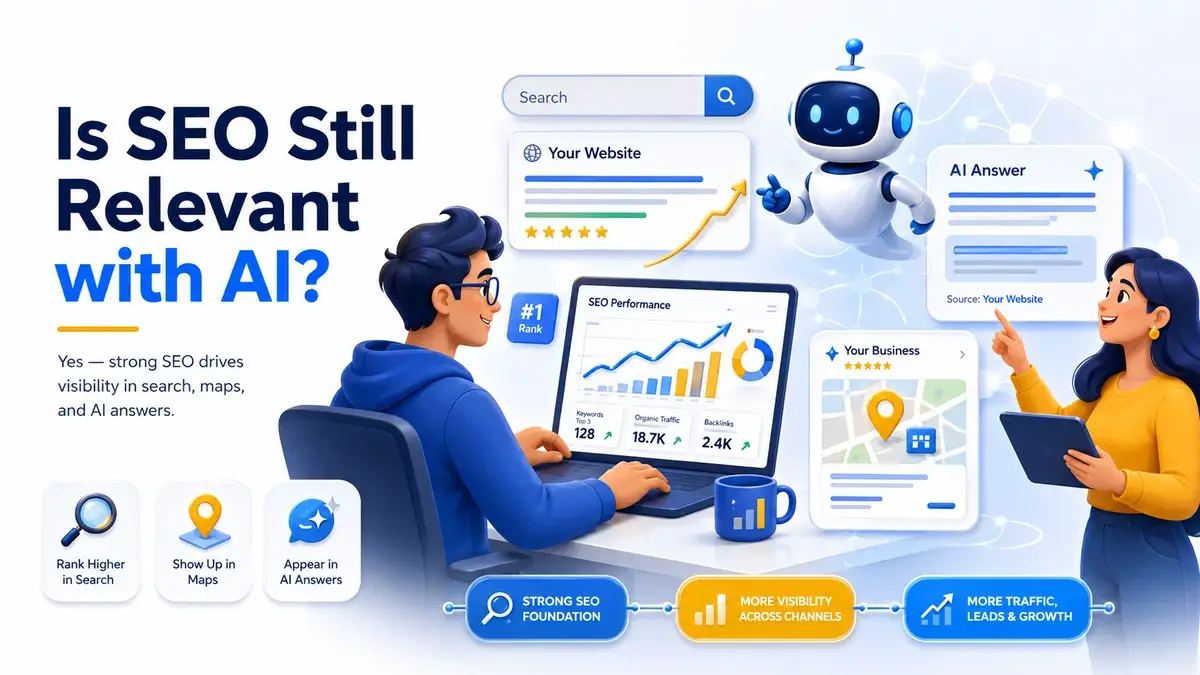
Is SEO Still Relevant With AI?
Yes. SEO remains highly relevant as AI changes the way people search. AI has introduced new discovery experiences, but businesses still need to be crawlable, credible, clearly explained, and supported by trustworthy information online. Google has stated that AI Overviews and AI Mode rely on content from its Search index and that foundational SEO practices still matter for visibility.
That means your website still needs to be:
- Crawlable and indexable
- Technically sound
- Helpful to users
- Clear about who you are and what you offer
- Structured around real customer questions
- Supported by authority and trust signals
- Optimized for local and service-based intent
AI systems are more likely to understand a business when its information is specific, consistent, and easy to verify. Thin content, vague service pages, weak location signals, poor technical structure, and unsupported claims make that harder.
Modern SEO therefore includes AI visibility. We organize content so it can perform in traditional search while also giving AI platforms clear information to summarize and reference. That means explaining services precisely, answering important questions directly, and showing real evidence of expertise instead of relying on broad marketing claims.
Why Is SEO Important to My Business?
SEO matters because people are already searching for the problems your business solves. The question is whether they find you, understand what makes you a good fit, and feel confident enough to take the next step.
A strong SEO strategy helps your business:
Generate More Qualified Leads
SEO reaches people who are actively looking for a service, product, or answer. These visitors often have stronger intent than someone who sees a general advertisement because they are already trying to solve a specific problem.
Build Trust and Credibility
A strong organic presence gives prospects more opportunities to learn about your business before contacting you. Helpful service pages, educational content, reviews, and consistent information can make your company feel established and dependable.
Reduce Dependence on Paid Ads
Paid advertising can be valuable, but the traffic ends when the spending stops. A well-developed SEO presence can continue attracting visitors after the initial work is completed, helping the business rely on a healthier mix of lead sources.
Support Every Other Marketing Channel
The improvements made for SEO often strengthen the rest of your digital marketing. Clearer service pages, faster load times, better internal links, stronger landing pages, and more useful content can improve paid campaigns, social media, email, AI visibility, and conversion.
Increase Business Value
Strong organic visibility, documented lead generation, useful website content, and a trusted digital presence can become transferable business assets. SEO does not guarantee a specific valuation, but it can make customer acquisition more predictable and reduce dependence on referrals or a single advertising source.
Why SEO Is Critical to Your Digital Marketing Strategy
Digital marketing works best when its channels support one another. Your website sits at the center of that system. Paid ads, social media, Google Business Profile activity, email campaigns, referrals, and AI search experiences often send people back to the site for more information.
If the site is slow, confusing, thin, or poorly organized, those other efforts can still lose opportunities. SEO helps make sure the website can attract the right audience, answer the questions that influence a decision, and guide visitors toward a clear next step.
A strong SEO strategy helps answer important questions:
- Who are your best customers?
- What are they searching for?
- What problems do they need solved?
- Which services are most profitable for your business?
- What locations do you want to compete in?
- What content does your website need to earn trust?
- What pages should rank for high-value searches?
- What technical issues are holding your site back?
- How can your website convert more visitors into leads?
These questions keep the strategy tied to the business instead of allowing SEO to become a disconnected exercise in chasing rankings.
Our SEO Approach
Digital Growth Pros uses a complete, practical approach to SEO. We do not rely on keyword stuffing, mass-produced location pages, thin blog posts, or a universal checklist applied to every company. We begin with the business model, the market, the customer journey, and the areas where stronger visibility could create the most value.
1. SEO Audit and Strategy
We review the website, rankings, competitors, content, technical health, local visibility, and conversion path. This gives us a clear picture of what is working, what is missing, and which issues deserve attention first.
2. Keyword and Search Intent Research
Not every keyword is worth pursuing. We look for service terms, local searches, comparisons, customer questions, and buyer-intent phrases that match the work you actually want more of.
3. Website and Technical Optimization
Search engines and visitors both need a site that works properly. We review site speed, crawlability, indexing, URL structure, internal linking, mobile performance, metadata, schema markup, and page experience.
4. SEO Content Creation
Content should be useful before it is optimized. Google guidance emphasizes helpful, reliable, people-first content rather than pages created only to manipulate rankings. We create and improve content that answers real customer questions, explains services clearly, and incorporates the firsthand knowledge that makes the business different.
5. Local SEO Optimization
Businesses serving a city, region, or service area need more than broad organic visibility. We align the website, Google Business Profile, location content, reviews, and local signals so they support the markets the business can realistically serve.
6. AI Visibility Optimization
AI-powered search is changing how people evaluate providers. We structure content so AI systems can better understand services, expertise, locations, and authority through clear explanations, FAQs, schema, entity consistency, and useful answer-based content.
7. Conversion Optimization
Traffic only matters when visitors can act on it. We review calls to action, page flow, contact forms, phone placement, trust signals, intake steps, and other points where a qualified visitor may hesitate or leave.
SEO and AI Visibility Work Together
The future of search involves more than a traditional list of blue links. Customers now discover information across search results, maps, AI-generated answers, voice tools, directories, and recommendation platforms.
That includes:
- Google Search
- Google Maps
- AI Overviews
- AI Mode
- ChatGPT-style search experiences
- Voice search
- Local search
- Featured snippets
- People Also Ask results
- Industry-specific directories
SEO gives these systems a stronger foundation for understanding the business. AI visibility expands the number of places where that information may be used. Both depend on clear content, technical accessibility, consistent facts, and genuine authority.
We do not treat AI visibility as a replacement for SEO or promise a guaranteed position inside an AI answer. Results can vary by platform, prompt, location, and time. The practical goal is to make the business easier to find, interpret, verify, and reference.
What Makes SEO Successful?
Successful SEO is built through consistent improvements, not shortcuts. It requires technical discipline, useful content, authority, and the willingness to adjust as search behavior and competition change.
The strongest SEO campaigns usually include:
- A technically sound website
- Clear service pages
- Strong location pages
- Helpful educational content
- Optimized metadata and headings
- Internal linking
- Schema markup
- Google Business Profile optimization
- Positive reviews and reputation signals
- High-quality backlinks and citations
- Conversion-focused landing pages
- Ongoing performance tracking
SEO creates compounding value when each improvement strengthens the next. Better structure helps content get discovered. Stronger content earns links and trust. Better conversion makes the traffic more valuable. Ongoing measurement shows where the next opportunity exists.
Frequently Asked Questions About SEO
What is SEO?
SEO stands for Search Engine Optimization. It is the process of improving your website so search engines can understand your business and show relevant pages to people searching for your services.
Is SEO still relevant with AI?
Yes. AI search still depends on accessible, well-structured, trustworthy information. A strong SEO foundation helps your business compete in traditional results and gives AI systems clearer information to understand and potentially reference.
Why is SEO important to my business?
SEO helps your business reach people who are already searching for your services. It can generate qualified traffic, build trust, diversify lead sources, support other marketing channels, and create long-term digital value.
How long does SEO take?
SEO is a long-term strategy. Technical fixes and on-page improvements can have an immediate effect on site quality, but meaningful growth in rankings and qualified traffic usually requires consistent work over several months. Timing depends on competition, the condition of the website, content quality, authority, and the market.
What is the difference between SEO and paid ads?
SEO earns organic visibility, while paid ads purchase sponsored placement. Paid ads can create faster traffic. SEO builds an owned presence that can continue producing visits without paying for every click. Many businesses benefit from using both for different purposes.
Does my business need local SEO?
If your customers search by city, neighborhood, region, or proximity, Local SEO is important. It supports visibility in Google Maps, local organic results, and location-based searches.
Can SEO help me get more leads?
Yes, but traffic alone is not enough. SEO produces better results when it targets the right intent, directs visitors to useful service pages, and gives them a clear way to call, submit a form, schedule, or take the next step.
Build a Stronger Business With SEO
SEO is more than a marketing tactic. It is the ongoing work of making your business easier to discover, understand, and trust.
Digital Growth Pros combines SEO experience with technical knowledge, Local SEO, AI visibility, conversion strategy, and intake awareness. That broader view helps us build search visibility around the entire customer journey rather than stopping when a page earns a ranking.
If your website is not ranking for the services that matter, is attracting the wrong traffic, or is failing to turn visibility into qualified opportunities, it may be time for a more focused SEO strategy.
More relevant visibility. Better-qualified leads. Stronger long-term digital value. Contact Digital Growth Pros today.